From Cash to Community: Designing Financial Rewards That Build Long-Term Engagement
The future of engagement in the gig economy isn’t bonuses or cash — it’s financial rewards that foster belonging, trust, and community. Here’s how platforms can design for loyalty that lasts.
Why cash alone doesn’t build loyalty anymore
Last year, I spoke with a founder running a large logistics marketplace.
They were spending thousands every month on cash incentives — sign-up bonuses, referral offers, delivery streak rewards.
The short-term results looked great: spikes in activity, full shift coverage, happy dashboards.
But a month later?
Half the new drivers were gone.
The problem wasn’t the bonus — it was that cash incentives only buy behaviour, not belief.
And in the gig economy, belief — in your platform, your mission, your reliability — is what keeps workers truly engaged.
The future of loyalty won’t be built on payouts.
It’ll be built on financial belonging — rewards that create community, not just transactions.
The engagement problem in modern marketplaces
Marketplaces today face a paradox.
You can acquire workers faster than ever, but keeping them engaged is harder than ever.
Freelancers, drivers, and creators now juggle multiple apps — Uber one week, DoorDash the next, Fiverr on weekends.
So how do you make your platform the one they return to?
Not by offering more money, but by offering more meaning.
Meaning comes from feeling part of something — a system that supports, recognises, and empowers them financially and emotionally.
That’s where financial rewards evolve into community design.
The Shift: From cash-based incentives to community-based rewards
Traditional engagement models were transactional:
“Do X, get Y dollars.”
But modern platforms are realising that the real retention lever isn’t cash — it’s connection.
Workers don’t just want to earn; they want to belong to a platform that helps them grow, save, and succeed.
And that’s what embedded financial rewards make possible — they blend incentives with empowerment.
Let’s unpack this shift:
This is how marketplaces are moving from cash to community.
Why this new model works
Workers join for money — but they stay for meaning.
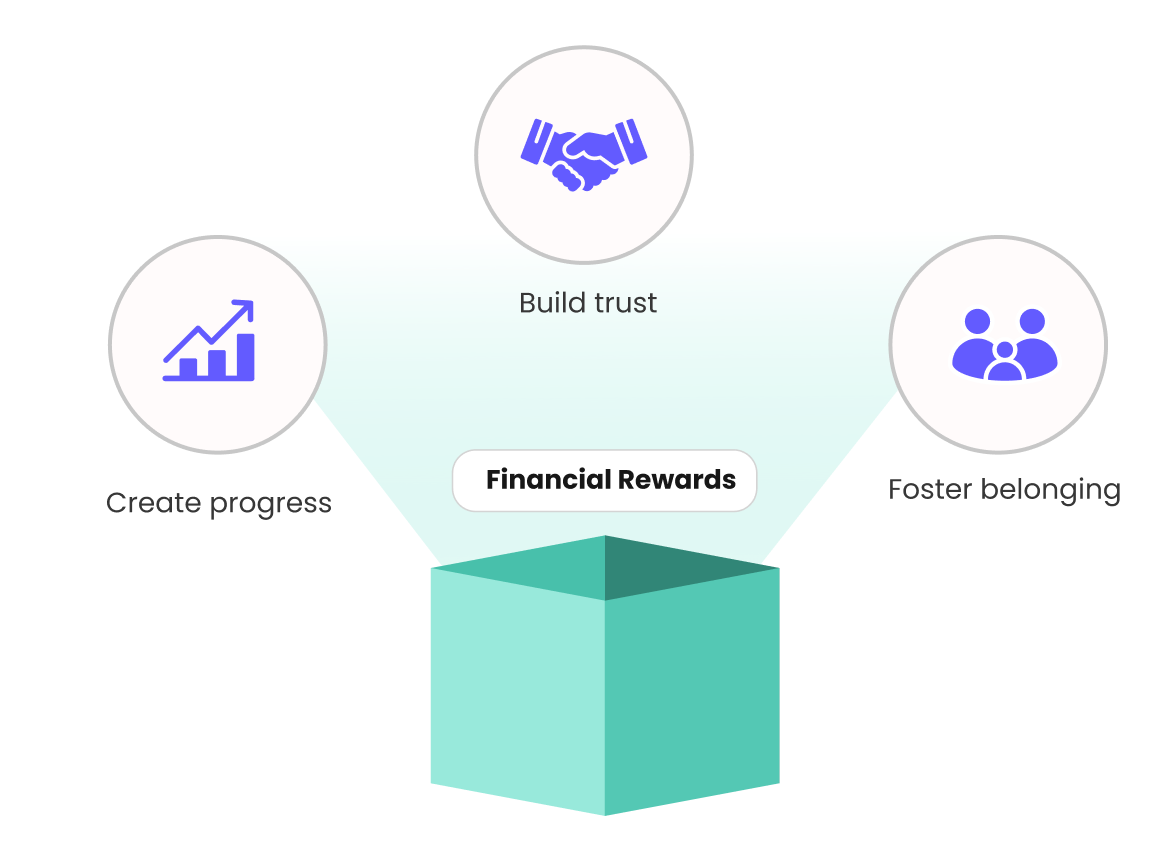
When financial rewards are embedded into a worker’s daily flow (not just added on top), they do three powerful things:
- Build trust: When workers see transparent earnings, instant payouts, and real savings, trust compounds.
- Create progress: Rewards like micro-savings or milestone bonuses help workers see tangible improvement in their financial wellbeing.
- Foster belonging: When financial tools are shared across a network — like pooled insurance or shared goals — they create a sense of “we’re in this together.”
These are the ingredients of long-term engagement.
The Design: How to craft financial rewards that engage and retain
Let’s talk about design — because engagement doesn’t happen by accident. It happens by architecture.
Here’s a framework to help you design financial rewards that stick.
1. Start with what workers value most
Before building perks, understand their pain points.
For most gig workers, it’s not about “extra money” — it’s about control over money.
- Can I get paid faster?
- Can I manage my expenses easily?
- Can I save something from each payout?
Solve these first through embedded payouts, smart wallets, or automated savings.
2. Reward consistency, not just performance
Instead of rewarding “top performers,” reward consistent contributors.
Example:
Offer a micro-bonus after every 10 consecutive completed jobs or a savings top-up for reaching monthly goals.
This builds long-term participation, not one-time spikes.
3. Embed rewards into everyday actions
Don’t make users chase rewards — let them earn passively through participation.
Examples:
- 1% cashback on every completed transaction.
- Automatic round-up savings from each payout.
- Insurance coverage unlocked after completing 100 gigs.
It’s not about adding another app or step — it’s about weaving it into the workflow.
4. Connect financial growth with community growth
Use rewards to drive collective progress.
Example:
- “When your group completes 1,000 hours this month, everyone gets a shared savings boost.”
- “Top 10% of consistent earners get mentorship or education benefits.”
This builds a peer-driven engagement loop — workers feel they’re part of something larger than themselves.
5. Make transparency your superpower
Show workers exactly how rewards are calculated, distributed, and accumulated.
A transparent financial experience is the most powerful trust signal you can send.
When workers understand how money moves, they stop feeling like gig contractors and start feeling like partners.
The Proof: What happens when financial rewards become community engines
Across marketplaces we’ve worked with at MyGigsters, platforms embedding financial rewards have seen powerful shifts:
- 40% drop in churn among early-pay and wallet-enabled workers.
- 3–5x higher engagement when rewards are tied to milestones, not cash drops.
- Double the NPS when workers feel financially empowered.
One example: a delivery marketplace introduced group-based savings goals, where teams earned bonus savings when everyone hit their weekly delivery targets.
It turned individual tasks into community achievements — and retention skyrocketed.
That’s what happens when finance meets belonging.
The Founder’s Perspective: Designing for engagement that lasts
If you’re building a marketplace or gig platform today, ask yourself this:
“Are we rewarding activity, or are we enabling progress?”
Because the platforms that win aren’t the ones giving out the biggest bonuses — they’re the ones building ecosystems where workers grow financially and emotionally.
Here’s what that looks like:
- Replace transactional rewards with embedded, recurring financial benefits.
- Align incentives with outcomes — reward reliability, contribution, and longevity.
- Make community part of the financial experience — shared goals, team bonuses, pooled insurance.
- Use embedded finance partners like MyGigsters to build this infrastructure without regulatory overhead.
This is how engagement compounds — one transparent, meaningful transaction at a time.
The Takeaway
Cash rewards fade. Community rewards endure.
When your platform helps gig workers earn faster, save smarter, and belong deeper — you’re not just building engagement; you’re building ecosystem loyalty.
And loyalty built on belonging doesn’t churn.
That’s the new playbook:
From cash to community — where every payout builds partnership, and every benefit builds belief.
Final Thought
The gig economy doesn’t need more perks.
It needs more purposeful rewards — ones that help people not just make a living, but build a life.
That’s what financial infrastructure — designed with empathy and insight — can do.