Automating Payouts and Compliance: Why Marketplaces Are Ditching Manual Banking

Manual payouts are slowing down growth for marketplaces. Discover how automating payments and compliance builds trust, scales faster, and keeps regulators happy.
When manual banking breaks at scale
Not long ago, I was talking to a founder of a marketplace that connects healthcare locums to clinics across Australia.
They’d grown fast — 3,000+ professionals, 200 active clinics, and hundreds of invoices flying around every week.
But there was a catch.
Every Friday, their operations team spent an entire day reconciling payments, updating spreadsheets, and manually sending funds through internet banking.
It worked fine when they had 20 contractors.
At 2,000, it became chaos.
Payments went missing, errors crept in, and compliance checks lagged behind.
The founder summed it up perfectly:
“We built a tech platform… but we were still running finance like a small business.”
That story isn’t rare.
It’s what many marketplaces go through right before they decide to ditch manual banking for automated payout infrastructure.
Manual banking doesn’t scale
Most marketplace founders underestimate how complex payments get when you’re paying hundreds or thousands of independent workers.
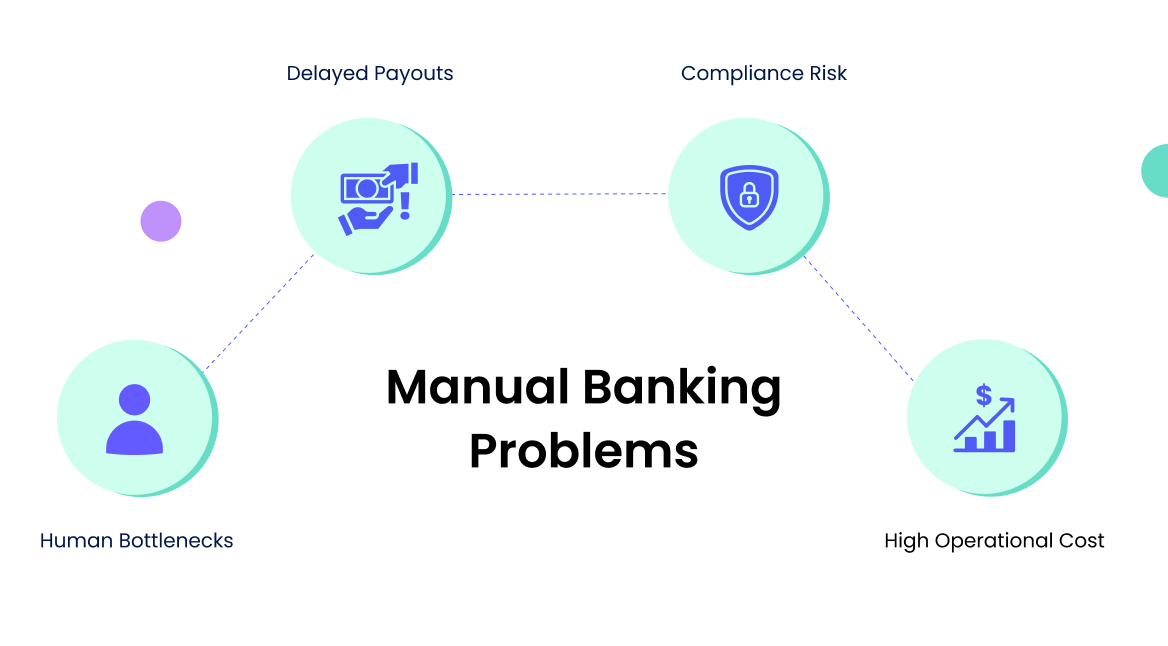
Here’s what happens when you rely on manual banking or basic payment gateways:
- Human bottlenecks: Teams spend hours processing CSVs, matching names, and reconciling transfers.
- Delayed payouts: Workers wait 2–5 business days, hurting trust and engagement.
- Compliance risk: Inconsistent KYC and AML checks create exposure for regulators.
- Poor visibility: No central dashboard for payouts, fees, or errors.
- High operational cost: Every payout becomes a cost centre, not a growth engine.
The irony?
Most of these marketplaces call themselves “tech platforms.”
Yet behind the scenes, their finance still runs on spreadsheets and bank exports.
The Shift: From bank transfers to automated payout orchestration
Leading marketplaces today are realising something crucial — payouts aren’t an admin task, they’re a core product experience.
A delayed or incorrect payment is as damaging as a bad review.
And compliance gaps can undo years of trust overnight.
That’s why marketplaces are embracing automated payout orchestration — systems that handle disbursements, reconciliation, and compliance in one seamless flow.
Think of it as upgrading from “manual finance” to “financial automation infrastructure.”
How automated payouts actually work
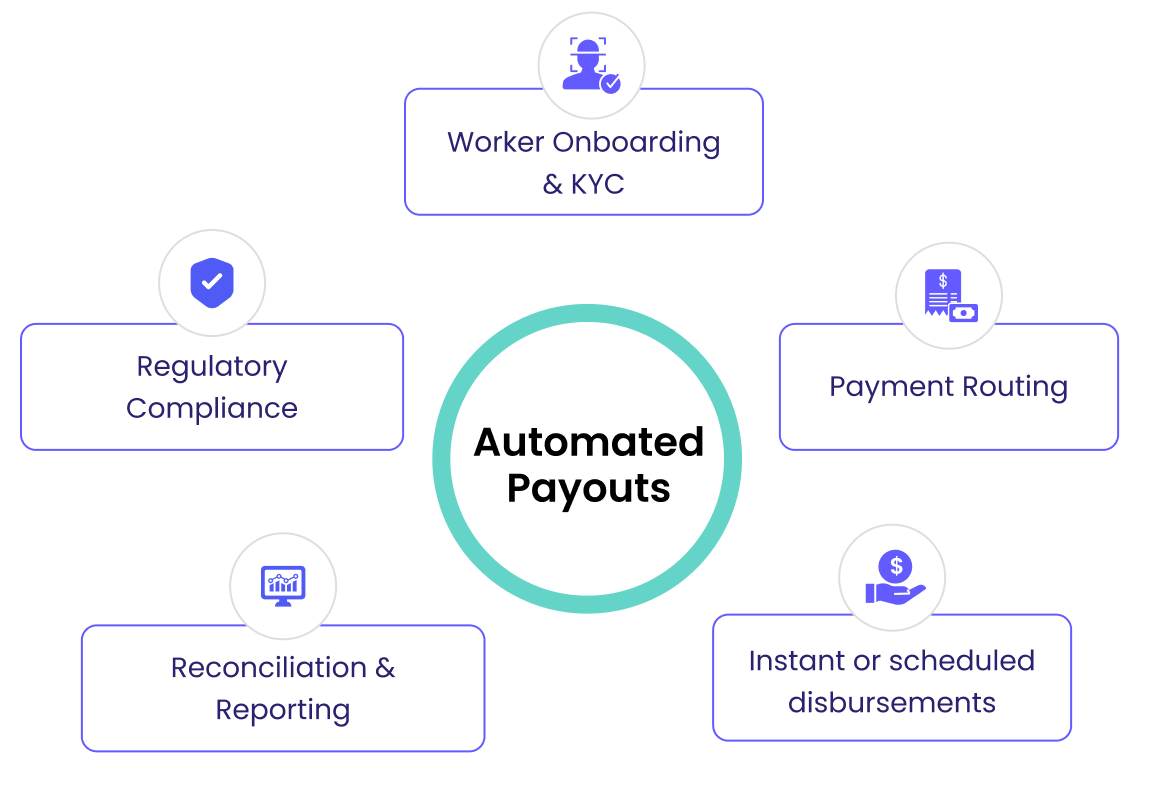
Here’s what happens behind the scenes when a marketplace automates its financial layer with platforms like MyGigsters:
- Worker onboarding & KYC
New workers are verified instantly through integrated KYC/AML checks. No forms, no spreadsheets. - Payment routing
When a job is completed or invoice approved, payouts are automatically calculated — fees, commissions, and taxes included. - Instant or scheduled disbursements
Funds move automatically to worker accounts or wallets — instantly, daily, or weekly, depending on platform policy. - Reconciliation & reporting
The system syncs every transaction to the platform’s accounting or ERP tool, with complete audit trails. - Regulatory compliance
Transactions are screened for AML risks, flagged for review if needed, and stored for audit readiness.
All this happens in seconds — with zero human touch.
The Benefits: Speed, compliance, and trust at scale
When marketplaces automate payouts and compliance, they unlock three massive advantages:
1. Speed that delights workers
Instant and predictable payouts create trust loops — workers know they’ll get paid on time, every time.
It’s not just operational efficiency; it’s retention fuel.
2. Built-in compliance
Regulatory pressure on gig platforms is increasing globally.
Automated systems help platforms stay compliant with KYC/AML, income reporting, and cross-border remittances — without needing a legal team the size of a bank.
3. Scalable efficiency
No more manual banking hours, failed transfers, or reconciliation headaches.
Finance teams can focus on strategy, not data entry.
And there’s one more hidden benefit:
Every automated payout strengthens your brand’s reliability.
In the gig economy, trust is the product.
The Compliance Angle: Why it’s not optional anymore
If your marketplace is handling money flow between two or more parties, you’re already under regulatory scrutiny.
Authorities across Australia, India, and Southeast Asia are tightening oversight on:
- AML/CTF (Anti-Money Laundering / Counter-Terrorism Financing)
- Data protection
- Cross-border remittance and digital wallets
Manual systems simply can’t keep up.
Miss one verification or transaction log, and your marketplace risks fines, frozen accounts, or — worse — reputational damage.
Automating compliance isn’t about red tape.
It’s about protecting your platform’s longevity.
Case Example: The day automation saved a marketplace
A logistics marketplace we worked with used to manually pay 600+ drivers through bulk bank uploads.
Every payout batch took 4–5 hours — and mistakes were common.
When they switched to MyGigsters’ Payout Orchestration, here’s what changed:
- Payout time: from 5 hours to 5 minutes
- Reconciliation: automatic across accounting and ledger
- KYC verification: real-time for new drivers
- Compliance audits: done in one click
Result: fewer errors, happier workers, and 35% reduction in operating cost within 60 days.
They didn’t just automate payments — they automated trust.
The Founder’s Takeaway: Payments = Experience
Most founders obsess over customer UX but forget about financial UX.
If your payout experience is slow, opaque, or error-prone — that’s the story workers tell about you.
Here’s what the best platforms are doing differently:
- Embedding automated payout rails directly into their platform
- Integrating KYC and AML workflows to stay compliant by design
- Providing real-time dashboards for finance and operations teams
- Partnering with embedded finance providers (like MyGigsters x Airwallex) to handle the heavy lifting
The result: fewer manual tasks, faster growth, and a reputation for reliability that compounds.
The Future: Compliance that moves as fast as you do
Automation isn’t just about moving money faster — it’s about moving smarter.
Tomorrow’s marketplaces won’t just connect supply and demand.
They’ll power entire ecosystems of verified, compliant, financially connected participants.
The platforms that get there first — the ones that embed payout and compliance automation now — will set the new trust standard for the gig economy.
FAQs
1. What is payout orchestration?
It’s the automated management of sending funds to multiple parties — calculating fees, handling compliance, and reconciling transactions without manual input.
2. Why do marketplaces need KYC/AML automation?
To verify users instantly, prevent fraud, and meet regulatory requirements without slowing onboarding.
3. What tools or systems can enable this?
Platforms like MyGigsters provide embedded payout and compliance solutions powered by licensed partners like Airwallex, ensuring security and scalability.
4. Can small marketplaces benefit too?
Absolutely. Even early-stage platforms can save hours weekly and avoid compliance headaches by automating from day one.
👉 Discover how MyGigsters helps marketplaces automate payouts, KYC, and compliance — reducing manual work, increasing trust, and powering faster growth.